



Ferritin: Your Body’s Iron Reserve Manager
Ferritin, a term that sounds somewhat technical, is actually closely related to everyone’s health. As a manufacturer of medical testing reagents, we hope to help you understand this important protein that works silently in the body.
What is Ferritin?
Ferritin is a soluble tissue protein that can store iron in the body. Normal human serum contains only small amount of ferritin. Decreased serum ferritin is common in iron deficiency anemia, massive blood loss, long-term diarrhea, and malnutrition, while significantly increased serum ferritin is common in megaloblastic anemia and aplasticanemia. Its primary function is to store iron and release it as needed by the body, making it the human body’s “iron reserve bank.”
Main Functions of Ferritin
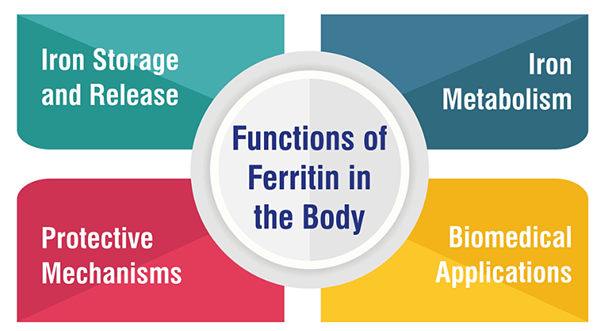
1. Iron Storag: Ferritin safely stores iron that is not immediately needed by the body, preventing free iron from causing oxidative damage.
2. Iron Metabolism Regulation: When the body requires iron (such as for red blood cell production), ferritin releases stored iron to ensure an adequate supply to various parts of the body.
3. Body Protection: By binding excess iron, ferritin reduces the generation of free radicals, protecting cells from oxidative damage.
4.Biomedial Applications:Besides its physiological functions, ferritin also has applications in materials science. It can serve as a precursor for the preparation of iron nanoparticles, which are widely used in various fields, including carbon nanotube growth and the synthesis of biomedical nanoparticles. The protein shell formed by ferritin can be used as a template to control particle growth and prevent aggregation, fully demonstrating its versatility in nanotechnology applications.
Why Test Ferritin Levels?
Ferritin testing is an important indicator in modern healthcare, primarily used for:
1)Diagnosing Iron Deficiency Anemia
Ferritin is the most sensitive indicator for assessing iron reserves. When the body’s iron reserves are insufficient, ferritin levels will decrease first, before changes in hemoglobin, which helps in the early detection of iron deficiency.
2)Evaluating Iron Overload Disorders
Diseases such as hereditary hemochromatosis can cause excessive iron accumulation in the body, leading to a significant increase in ferritin levels. Early detection helps in timely intervention.
3)Monitoring Chronic Diseases
Many chronic diseases (such as chronic inflammation, liver disease, and certain cancers) can affect iron metabolism, leading to abnormal changes in ferritin levels.
4)Assessing Nutritional Status
Ferritin levels can reflect the body’s iron nutritional status, which is particularly important for special populations such as pregnant women, infants, young children, and adolescents.
How to Maintain Healthy Ferritin Levels?
Maintaining appropriate ferritin levels is crucial for health:
- Balanced diet: Moderate consumption of red meat, poultry, fish, legumes, and dark green vegetables.
- Avoid excessive iron supplementation: Do not take iron supplements long-term unless advised by a doctor.
- Regular testing: Especially for high-risk groups (such as women with heavy menstrual bleeding, pregnant women, vegetarians, etc.).
The Importance of Accurate Testing
Accurate ferritin level detection is crucial for disease diagnosis and treatment. Our company is committed to developing high-quality ferritin testing reagents to ensure the accuracy and reliability of test results, providing clinicians with strong diagnostic evidence, helping more people maintain iron metabolism balance, and promoting overall health.
Understanding ferritin means understanding your body’s iron reserve management system. Regularly monitoring this indicator is an important step in maintaining health.
Recommends from Baysen Medical
As a professional manufacturer of medical testing reagents, We Baysen Medical are committed to providing accurate and reliable Ferritin Fia reagents with Reader-Wiz-A101 and WIZ-A202,WIZ-A203, assisting healthcare institutions in identifying allergy signals faster and more precisely. However, what we wish to emphasize more is that allergies are not unmanageable. Through scientific testing to clarify one’s condition, and under a doctor’s guidance—by avoiding allergen exposure, undergoing standardized treatment, or desensitization therapy—most allergic symptoms can be effectively controlled.
Post time: Jan-27-2026