



Early Screening, Peace of Mind: Understanding HCV and Two Major Rapid Detection Technologies
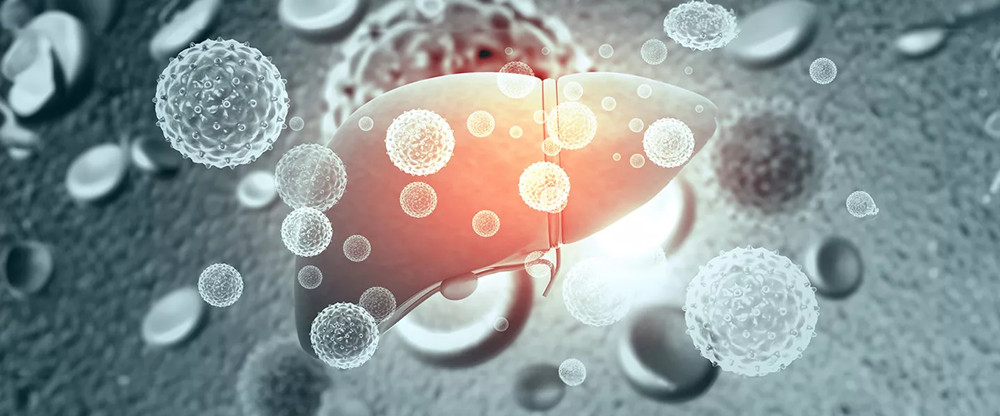
Hepatitis C virus (HCV) infection is a global public health problem. It is primarily transmitted through blood, and early infection often presents with asymptomatic symptoms, leaving many infected individuals unaware of their condition. However, the virus silently damages the liver, potentially progressing to liver fibrosis, cirrhosis, and even liver cancer. Therefore, early screening and diagnosis are crucial first steps in halting disease progression and improving cure rates.
Currently, initial HCV screening mainly relies on detecting the presence of HCV antibodies in the blood. With technological advancements, simple and rapid testing methods have greatly facilitated screening, among which colloidal gold assays and fluorescent immunoassay reagents are two widely used core technologies.
Colloidal Gold Rapid test : The Fast and Convenient “Scout”
The colloidal gold method is the technology commonly used in what we call “rapid test .” Its core principle involves using specially prepared gold nanoparticles as tracers. When HCV antibodies are present in the sample, they specifically bind to pre-designed antigens in the reagent and accumulate on the test line, causing the initially invisible gold particles to aggregate and form a clear red band.
The biggest advantages of this method are:
1)Speed: Speed can usually be visually assessed within 15-20 minutes.
2)Easy to operate: No complex equipment is required; trained personnel can even complete the procedure at primary healthcare facilities or specific installation sites.
3)Good stability: Reagents can usually be stored and transported at room temperature.
Therefore, colloidal gold rapid test are well-suited for large-scale preliminary screening, emergency testing, and initial screening in areas with limited medical resources, effectively identifying potential infected individuals from the population.
Fluorescent Immunoassay Diagnostic Reagent: The Sensitive and Accurate “Analyst”
The fluorescent immunochromatographic assay represents a significant upgrade to traditional chromatography technology. It uses special fluorescent microspheres as markers. After the antigen-antibody reaction occurs, the fluorescent material accumulated on the test line emits a visible fluorescent signal when excited by a specific light source.
Compared to the colloidal gold method, its core characteristics are:
1)Higher Notification and Waveform Quality: Capable of detecting concentrated resistance, resulting in more accurate results and effectively reducing the risk of missed detections and false positives.
2)Quantitative Analysis: Reading fluorescence intensity using a dedicated fluorescence detector provides richer detection information.
3)More Suitable for Automation: Easily integrates with detection equipment, improving the efficiency of batch testing in laboratories.
Fluorescent immunoassay reagents are primarily used in hospital ,laboratory departments, disease control centers, or third-party testing laboratories. They serve as a supplementary verification for initially positive samples or are directly used in clinical testing scenarios requiring higher precision.
Summary
Whether it’s colloidal gold assays, a powerful tool for rapid initial screening, or fluorescent immunoassays, a precise confirmation of the preferred method, both are indispensable tools in the fight against hepatitis C. The choice of method depends on the specific application scenario, available resources, and testing requirements.
We Baysen Medical is always focus on diagnostic technique to improve the quality of life . We have developed 5 technology platforms- Latex , colloidal gold , Fluorescence Immunochromatographic Assay , Molecular,Chemiluminescence Immunoassay, Our HCV Rapid test And HCV FIA reagent are easy operation and can get test result in 15 mins
Post time: Jan-13-2026