



Chronic diarrhea lasting more than 4 weeks is a “red alert” sounded by the intestines, and vigilance for inflammatory bowel disease (IBD) is needed.
But here’s the problem: when you walk into the clinic, how does the doctor determine whether your intestines are actually inflamed? And how severe the inflammation is? At this point, a seemingly “unremarkable” test comes into play — fecal calprotectin testing. It is like a faithful “interpreter” that can translate the intestines’ “whispers” into data that doctors can understand. In this issue of “How Much Do You Know About the Gut,” we’ll help you get to know this “interpreter” of intestinal health.
1) When the intestines are inflamed, who can tell us?
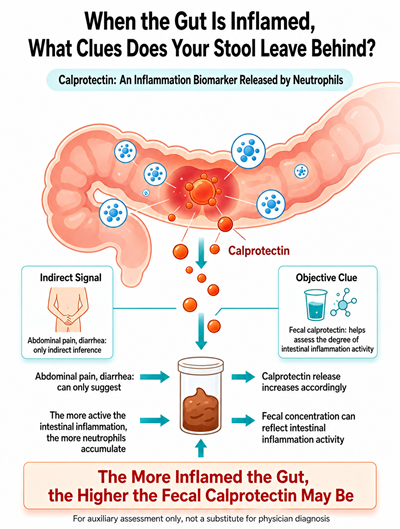
Imagine this: your intestines are “on fire,” but you can’t see or touch it — you can only guess through “indirect signals” such as diarrhea and abdominal pain.
Is there a method that can directly and objectively tell us — whether the intestines are inflamed at all? And how severe the inflammation is?
The answer is: yes. And it’s hidden right in your stool.
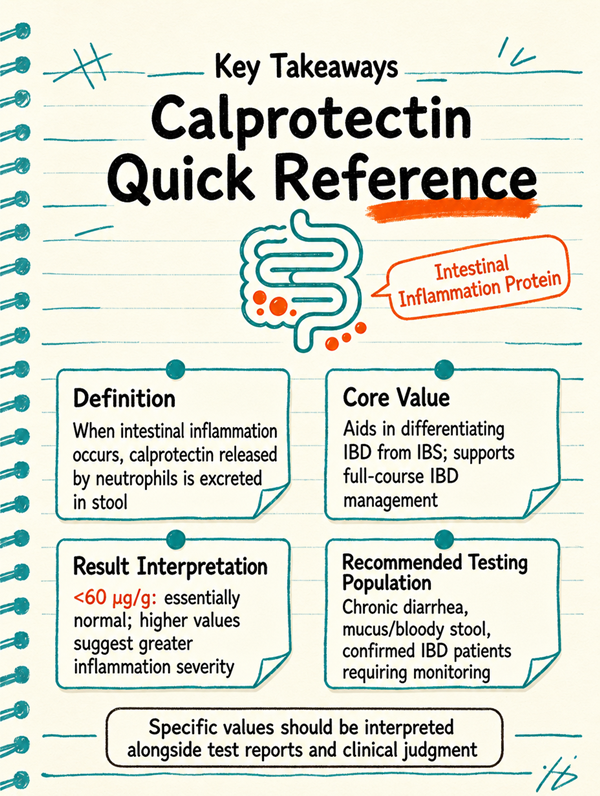
When intestinal inflammation occurs, neutrophils gather in large numbers at the site of inflammation to “put out the fire.” During this “battle,” these cells release a protein — calprotectin. It is excreted from the body with the stool, and its concentration directly reflects the severity of intestinal inflammation.
2)Calprotectin: Why has it attracted clinical attention?
Before calprotectin emerged, doctors mainly relied on blood indicators (such as CRP, ESR, etc.) to judge inflammation. But these indicators have a “fatal flaw” — they lack intestinal specificity. In other words, if they are elevated, it may indicate inflammation somewhere in the body, but not necessarily in the intestines. Calprotectin is different. It has several “natural advantages”:
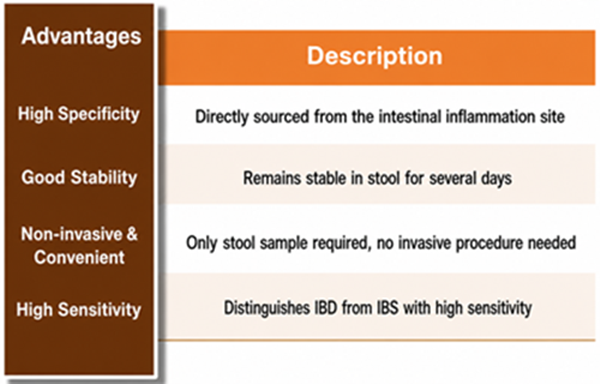
One fact: fecal calprotectin has been included in China’s guidelines for the diagnosis and treatment of inflammatory bowel disease, becoming a commonly used non-invasive biomarker in clinical practice
3) What can this “interpreter” help us do?
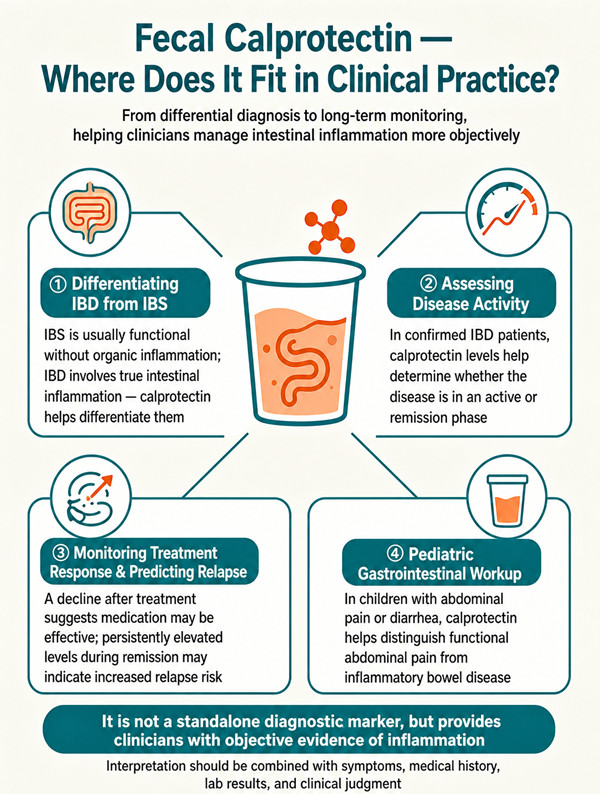
The clinical applications of fecal calprotectin are becoming increasingly extensive, mainly including the following aspects:
① Distinguishing IBD from IBS
This is calprotectin’s greatest “specialty.” The symptoms of irritable bowel syndrome (IBS) and inflammatory bowel disease (IBD) can sometimes be very similar — both can cause abdominal pain, diarrhea, and changes in bowel habits. But the two are fundamentally different: IBS is a functional disorder, with no organic inflammation in the intestines; IBD is actual intestinal inflammation.
② Assessing disease activity
For patients already diagnosed with IBD, calprotectin can tell doctors: is the disease currently in an active phase or in remission? Studies show that fecal calprotectin levels are highly correlated with the degree of intestinal inflammation seen under endoscopy. The higher the value, the more severe the inflammation; a decrease in the value can serve as one of the reference indicators for doctors to evaluate treatment efficacy.
③ Monitoring efficacy and predicting relapse
IBD is a chronic disease that requires long-term management. Calprotectin is like a “sentry.” A decrease in calprotectin after treatment may indicate that the treatment is effective; if calprotectin begins to rise in a patient in remission, it may signal an impending relapse, allowing doctors to adjust the treatment plan in advance.
④ Investigating the cause of intestinal discomfort in children
For pediatric patients, calprotectin testing is especially valuable. It can help distinguish functional abdominal pain from true inflammatory bowel disease, avoiding unnecessary invasive tests.
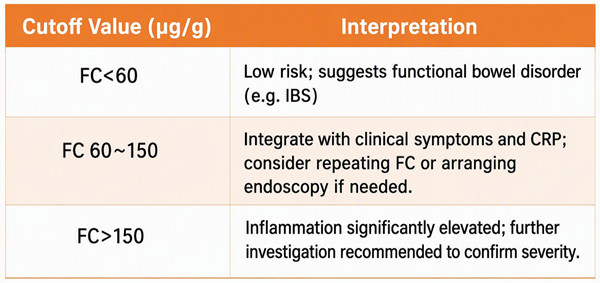
4) How should the test results be interpreted? What do the values mean?”
When you receive the test report, you may see a series of numbers. What do they mean?
5) Who is advised to undergo calprotectin testing?
If you or a family member experiences the following, it is recommended to consult a doctor about whether testing is needed:
- Long-term abdominal pain or diarrhea that does not improve for more than 4 weeks
- Stool with mucus or pus and blood
- Unexplained weight loss or anemia
- Already diagnosed with IBD and needing disease monitoring
- Children with recurrent abdominal pain or growth retardation, to rule out organic diseases
- Auxiliary screening for high-risk groups for colorectal cancer
Post time: Sep-17-2026