



How Total IgE Testing Identifies Allergy Triggers?
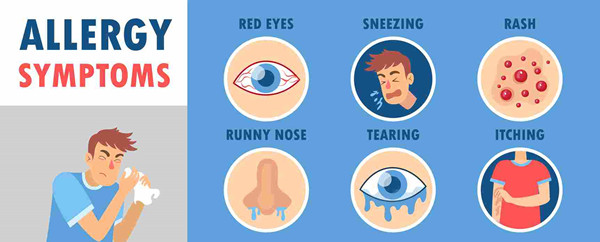
Do you frequently experience recurring rashes, rhinitis, or sudden wheezing? These problems may all point to the same source—allergies. Our bodies have a sophisticated “diagnostic system,” and Total IgE is a key component. Understanding total IgE testing may be your first step in unraveling the mystery of allergies.
What is Total IgE?
Immunoglobulin E (IgE) is the least abundant antibody in serum .The concentration of IgE in serum is associated with age, with the lowest values being measured at birth. Generally,adult lgE leavels are avhieved by 5 to 7 years of age .Between the ages of 10 and 14 years, IgE levels may be higher than those in adults. After age 70 years, IgE levels may decline slightly and be lower than the levels observed in adults younger than 40 years.
However, the normal level of IgE cannot exclude allergic diseases. Therefore, in the differential diagnosis of allergic and non-allergic diseases, quantitative detection of human serum IgE level is only of practical significance when used in combination with other clinical tests.
Total IgE Testing: The “Navigator” for Allergy Diagnosis
Total IgE is applicable to detection of Total Immunoglobulin E (T-IgE) in human serum/plasma/whole blood samples . While it cannot directly determine which specific substance is causing the allergy, it is of significant value in the auxiliary diagnosis of allergic diseases:
1.Auxiliary screening: An elevated total IgE level strongly suggests an allergic constitution or pathogen infection, indicating to the doctor the direction for further examination.
2.Evaluation of Risk and Severity: Generally, a higher total IgE level indicates a potentially more severe allergic reaction, which helps in assessing the severity and risk of attacks for conditions such as asthma.
3.Differential Diagnosis: It helps distinguish between allergic diseases (such as allergic rhinitis) and non-allergic diseases (e.g., vasomotor rhinitis).
4.Monitoring Treatment Efficacy: Regular monitoring of total IgE changes during desensitization therapy or drug intervention can indirectly assess the treatment effect.
Who Needs detection of Total IgE ?
It is recommended that individuals with the following conditions consult a doctor to determine if total IgE testing is advisable:
1.Recurrent suspected allergy symptoms (eczema, urticaria/hives, allergic rhinitis, asthma, etc.)
2.A clear family history of allergies
3.Individuals with specific occupational exposures (e.g., to dust, chemicals)
4.Initial screening before proceeding with specific allergen testing
Recommends from Baysen Medical
As a professional manufacturer of medical testing reagents, We Baysen Medical are committed to providing accurate and reliable total IgE Fia reagents with Reader-Wiz-A101 and WIZ-A202,WIZ-A203, assisting healthcare institutions in identifying allergy signals faster and more precisely. However, what we wish to emphasize more is that allergies are not unmanageable. Through scientific testing to clarify one’s condition, and under a doctor’s guidance—by avoiding allergen exposure, undergoing standardized treatment, or desensitization therapy—most allergic symptoms can be effectively controlled.
Post time: Jan-22-2026