



Why Multiplex Testing Matters This Respiratory Season ?
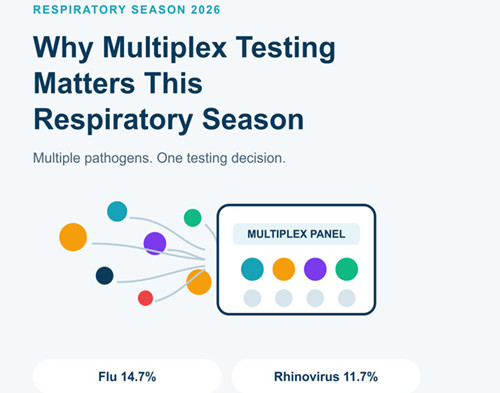
This week, the 2026 Guangzhou International Laboratory Medicine and In Vitro Diagnostics Exhibition is taking place, and multiplex respiratory pathogen testing is one of the most closely watched topics on site. Behind this attention is a real shift in clinical practice: the pathogen landscape of respiratory infections has moved from a “single-choice” question to a “multiple-choice” one.
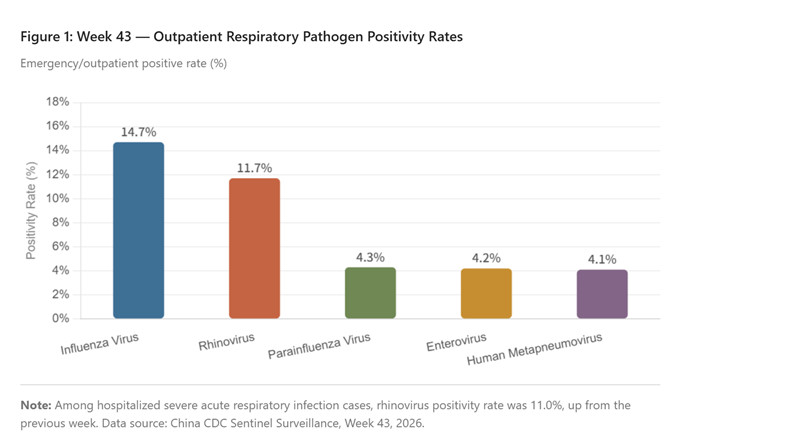
The latest surveillance data from the Chinese Center for Disease Control and Prevention (China CDC) show that in Week 43 of 2026, among respiratory samples from influenza-like illness (ILI) cases at sentinel hospital outpatient and emergency departments, the positivity rates were 14.7% for influenza virus, 11.7% for rhinovirus, 4.1% for human metapneumovirus, 4.3% for parainfluenza virus, and 4.2% for enterovirus. Respiratory syncytial virus, adenovirus, bocavirus, and Mycoplasma pneumoniae were also detected. Among hospitalized cases of severe acute respiratory infection (SARI), the positivity rate for rhinovirus reached 11.0% and continued to rise compared with the previous week. An earlier analysis by the National Health Commission also explicitly noted that the continued rise in acute respiratory diseases was associated with the co-circulation and superimposition of multiple respiratory pathogens. Clinicians in outpatient and emergency settings are no longer asking only “Is it flu?” but “Which pathogen is it—or which several are present at the same time?”
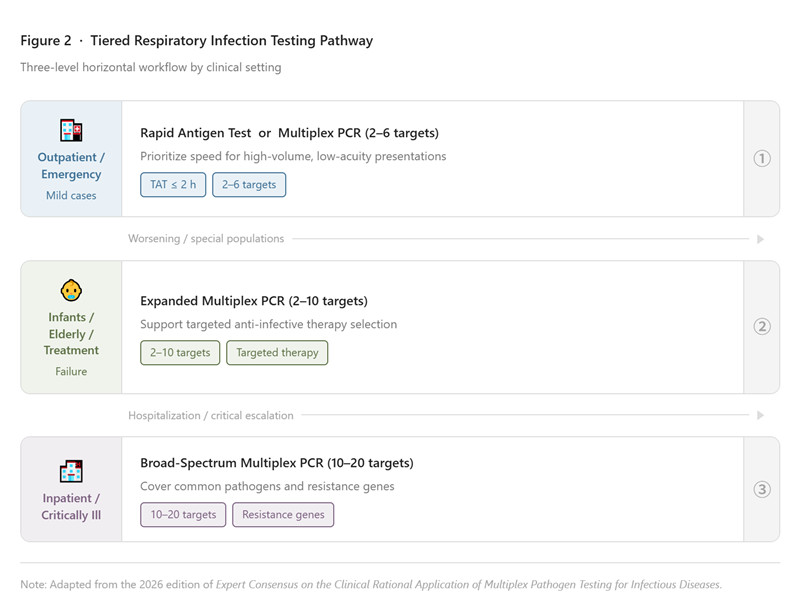
This shift is directly reflected in adjustments to testing strategies. The 2026 Expert Consensus on the Rational Clinical Application of Multiplex Pathogen Testing for Infectious Diseases sets out the core principles of “tiered and individualized” testing and opposes indiscriminate broad-spectrum panel testing without indications. For outpatient and emergency settings, the consensus gives a clear pathway: for mild cases where pathogen identification is needed, rapid antigen testing or 2–6-target multiplex nucleic acid testing should be preferred, with a turnaround time (TAT) of within 2 hours; for infants and young children, older adults, or patients who do not respond to empirical treatment, testing can be expanded to 2–10 targets to support targeted anti-infective therapy. In inpatient and severe settings, testing is further escalated to 10–20-target multiplex nucleic acid testing, covering common pathogens and antimicrobial resistance genes. In other words, what clinicians need is not “the more tests, the better,” but interpretable results delivered in the right setting, with the right target combination, within an acceptable time window.
For IVD reagent manufacturers, the implications of this clinical pathway are clear: the value of a product does not lie in a simple stacking of target numbers, but in whether it can meet the rigid requirements of outpatient and emergency settings for TAT and target coverage, and whether it can achieve standardized “sample-in, result-out” operation in primary-care settings. As the simultaneous activity of more than ten pathogens becomes the norm in autumn and winter, multiplex testing is shifting from an “optional extra” to essential infrastructure for etiological differential diagnosis in outpatient and emergency settings.
Post time: Nov-04-2026