



World Diabetes Day 2026: Why Accurate HbA1c Testing Matters for Early Action ?
November 14, 2026 marks the 20th United Nations World Diabetes Day. The International Diabetes Federation (IDF) has set the theme for 2026–2027 as “Early Action on Diabetes,” pointing to a fact that has been repeatedly verified yet remains insufficiently implemented: the window for diabetes prevention and control is far earlier than most people assume
Globally, the number of adults aged 20–79 living with diabetes has reached 589 million, meaning about 1 in every 9 adults is affected. More alarmingly, approximately 252 million of them do not know they have the disease—nearly 43% of all patients. China faces a similarly severe situation: the country has about 148 million adults with diabetes, and the prevalence among people aged 20 and above has risen to 13.67%. The population with prediabetes exceeds 500 million, meaning 1 in every 3 adults is in a “critical state” that may progress to diabetes at any time. Meanwhile, the undiagnosed rate among Chinese diabetes patients is as high as 49.7%—nearly half of patients are identified only when obvious symptoms or complications appear, missing the window in which intervention is most likely to delay or even reverse the disease.
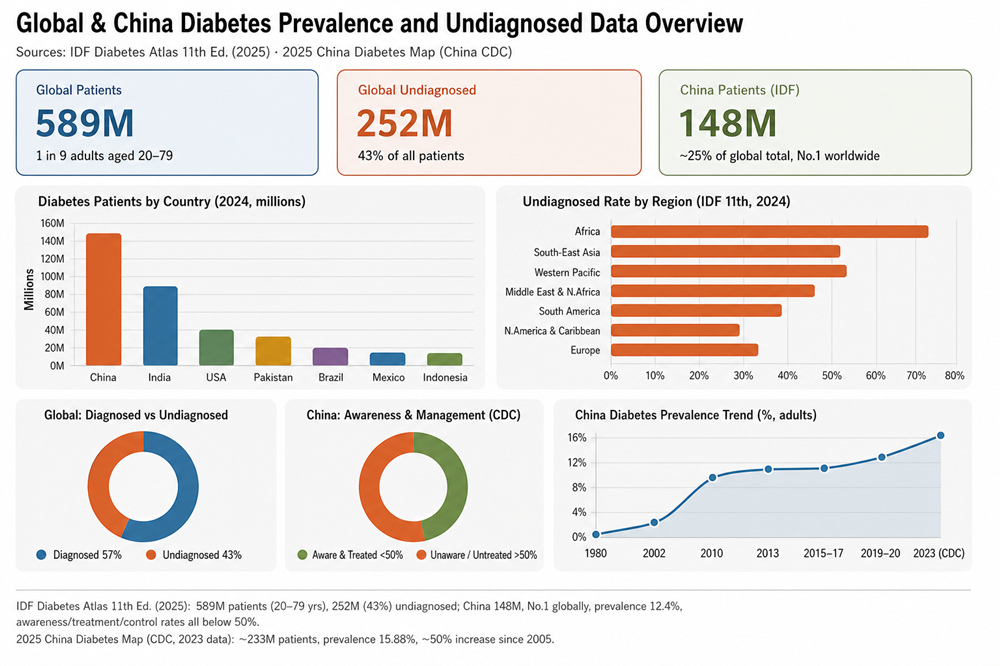
The premise of “early action” is “early detection.” To achieve early detection, both the accessibility and accuracy of testing tools are indispensable.
HbA1c reflects the average blood glucose level over the past 2–3 months. It is not affected by single episodes of diet, exercise, or emotional fluctuation, and is currently the “gold standard” for diabetes diagnosis and long-term glycemic management. The China Guidelines for the Prevention and Treatment of Diabetes (2024 Edition) explicitly lists HbA1c ≥6.5% as one of the diagnostic criteria for diabetes, while HbA1c 5.7%–6.4% indicates prediabetes. In primary-care screening settings, point-of-care HbA1c testing can provide results on site during the visit, compressing the “screening–identification–intervention” window from days or even weeks to within ten minutes, significantly improving screening compliance and management efficiency among high-risk populations.
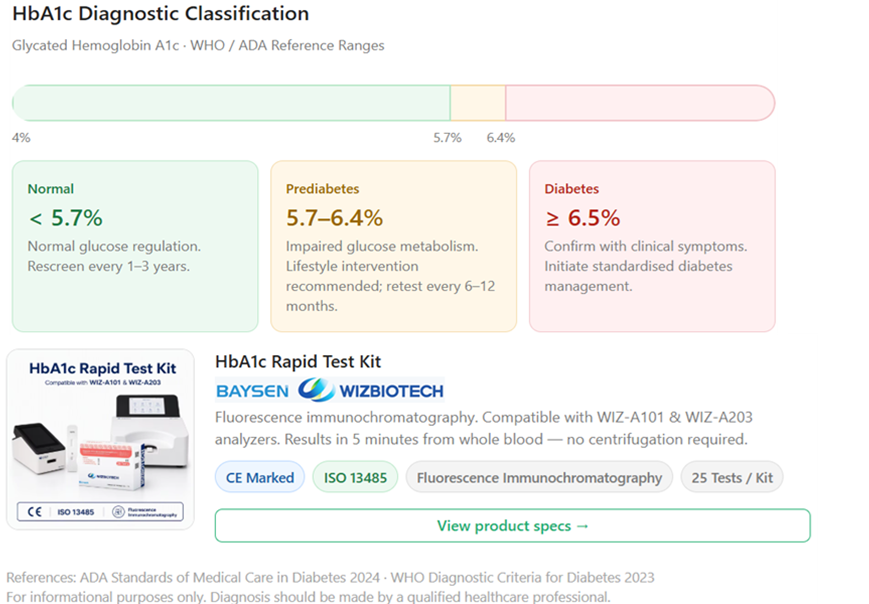
As an IVD reagent manufacturer, we know well that an accurate HbA1c result depends on a complete chain from raw materials and quality control to standardization systems. In the chain of “early action,” testing reagents are not a minor player—they determine whether screening can truly reach the grassroots level and whether physicians can make evidence-based judgments before the patient leaves the clinic.
World Diabetes Day lasts only one day each year, but “early action” needs to run every day. Making every HbA1c test reliable and accessible is our most direct response, as a testing reagent manufacturer, to “early detection and early intervention.”
Post time: Nov-09-2026