



Unlocking the Diabetes Dashboard: Understanding HbA1c, Insulin, and C-Peptide
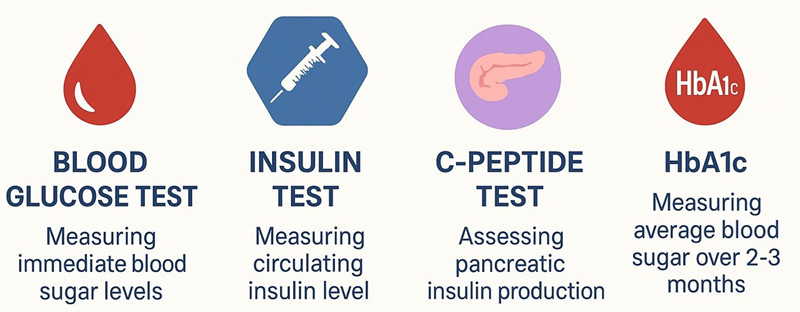
In the prevention, diagnosis, and management of diabetes, several key indicators on a Lab report are crucial. Besides the well-known fasting blood glucose and postprandial blood glucose, HbA1c, insulin, and C-peptide also play indispensable roles. They act like three detectives, each with their own expertise, revealing the truth about how the body processes blood glucose from different perspectives.
1. Glycosylated Hemoglobin A1c (HbA1c): The “Long-Term Recorder” of Blood Glucose
You can think of it as an “average blood sugar report card” over the past 2-3 months. The hemoglobin in your red blood cells binds with glucose in the bloodstream—a process called glycation.The higher the blood sugar concentration, the greater the proportion of glycation.
Its core functions are:
- Assessing long-term Blood Glucose Control: Unlike momentary fluctuations in blood glucose levels, HbA1c stably reflects the average blood glucose status over the past 8-12 weeks and is the gold standard for evaluating the effectiveness of diabetes treatment regimens.
- Aiding in Diabetes Diagnosis: According to WHO standards, an HbA1c level ≥ 6.5% can be used as one criterion for diagnosing diabetes.
In short, if fasting and post-meal blood glucose are “snapshots” of a moment in time, HbA1c is the “documentary,” showing the complete picture of your long-term glucose control.
2. Insulin and C-Peptide: The Golden Partner of Pancreatic Function
To understand the root cause of blood sugar issues, we must look at the source—the function of the pancreatic beta cells. This is where the “twin brothers,” Insulin and C-Peptide, come in.
- Insulin: Secreted by pancreatic beta cells, it is the only hormone that can lower blood sugar. It acts like a “key,” opening the cell’s door and allowing blood sugar to enter the cell and be converted into energy.
- C-Peptide:This is a substance produced simultaneously and in equal amounts with insulin by the beta cells. It has no function in lowering blood sugar itself, but it is a “faithful witness” to insulin production.
So, why test for both at the same time ?
The key advantage is that C-peptide is more stable and has a longer half-life than insulin, allowing it to more accurately reflect the actual secretory function of pancreatic β-cells. In diabetic patients already on exogenous insulin therapy, insulin antibodies may develop, interfering with the accuracy of insulin testing. C-peptide, however, is unaffected by this, thus becoming a more reliable indicator for assessing a patient’s own insulin secretion capacity.
3. The Trio in Concert: A Comprehensive Picture
In clinical practice, doctors combine these three indicators to create a clear metabolic profile:
1. Distinguishing Diabetes Type:
- For a diagnosed diabetic patient, extremely low insulin and C-peptide levels indicate a severe deficiency in insulin secretion, likely classifying it as type 1 diabetes.
- If insulin and C-peptide levels are normal or even elevated, but blood sugar remains high, it suggests insulin resistance, a typical characteristic of type 2 diabetes.
2. Assessing Pancreatic Function & Insulin Resistance:
- The insulin / C-peptide release test” observes the dynamic changes of these indicators after consuming sugary drinks, which can help determine the reserve and secretory potential of pancreatic β-cells.
- High insulin and high C-peptide levels accompanied by high blood sugar are direct evidence of insulin resistance.
3. Guiding Treatment Plans:
- For Type 2 diabetics with relatively preserved pancreatic function, medications that improve insulin resistance may be the first choice.
- For patients with nearly exhausted pancreatic function, insulin therapy needs to be initiated early.
Summary
- HbA1c reflects the “results” of long-term blood sugar control
- Insulin and C-Peptide reveal the “capability” and “efficiency” of your body’s internal sugar-control mechanism.
- Blood Glucose shows your body’s current “state.”
Understanding the significance of these three markers allows for a deeper understanding of diabetes. It empowers you to have more informed discussions with your doctor and work together to develop personalized monitoring and treatment plans for precise, scientific health management.
Conclusion
We Baysen Medical is always focus on diagnostic technique to improve the quality of life . We have developed 5 technology platforms- Latex , colloidal gold , Fluorescence Immunochromatographic Assay , Molecular,Chemiluminescence Immunoassay, Our HbA1c test kit, Insulin test kit ,C-peptide test kit are easy operation and can get test result in 15 mins
Post time: Nov-26-2025